
Lenders had filed 1,251 cases to recover Rs 24,765.5 crore. Wilful defaulters are the entities that do not pay back money despite the ability to do so. Defaulters above Rs 1 crore were considered for this exercise.
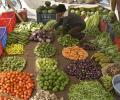
In most cases, however, retail consumers are paying higher prices in the absence of direct procurement from aggregator or farmers.

The government was also faced with problems on its balance of payments. It took steps to conserve declining foreign exchange reserves, and began to regulate the production, supply and distribution of gold. It banned forward trading in the yellow metal in November 1962, and introduced gold bonds as well, reveals the RBI's annual report for the year ending June 1963.

While freight traffic has gone up, the Google location data shows more people are stepping out of their homes.
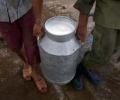
With the gradual opening up of shops, hotels, restaurants and catering services with limited number of participants, milk consumption has improved by 5-10 per cent from the lowest level.

The ruling mean FPIs cannot seek treaty protection against the new withholding tax that companies are required to deduct at source. The apex court order pertains to when the cricketing bodies of Pakistan, India, and Sri Lanka formed a joint committee to conduct the 1996 Cricket World Cup.
Branded and packaged edible oils are currently selling at around 50 per cent premiums over their loose varieties. Hence, products using edible oils would be costlier going forward.

The volume of shares traded in the stock market had fallen 28 per cent in April. Turnover, or the value of securities changing hands, fell 12.6 per cent. This trend of falling volumes seems to have stabilised in May.

With projections suggesting the number of cases in the city will touch 75,000 by the end of May, civic authorities are working overtime to add to the number of beds.
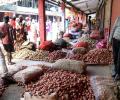
People in the know said plans were afoot to begin the sale of all food grains through online, with a major quantity through auctions that would be later extended to other commodities.
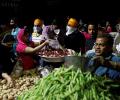
The government of Maharashtra decided to shut operations at APMC Vashi mandi between May 11 and 17 after confirmed cases of Covid-19 surpassed 80 in the APMC and over 450 across Navi Mumbai, where the mandi is located.

Radhakishan Damani is the only billionaire to see his wealth grow by around 20% during the lockdown.
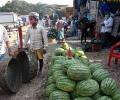
Vashi APMC traders see supplies to Mumbai impacted over movement curbs. A number of trucks sent to Mumbai from the market has reduced from 600 per day in recent times to around 300.

Normally, kharif sowing of vegetable seeds starts during the first week of May across the country. Farmers start preparing their fields to make them suitable for kharif sowing during the second fortnight of April. Now, however, faced with the lockdown, farmers are in a hurry to clear their fields of rabi crop and prepare for kharif planting. With a normal monsoon forecast this year, they are doing all they can to take advantage of pre-monsoon showers.

The spread of COVID-19 and the accompanying mayhem caused the S&P BSE Sensex to drop over 38.5 per cent from its all-time high of 42,273.9 to a low of 25,981.2 on March 23. Those in the astrology and even numerology segments received more calls than before during the time.
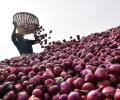
The model or average price for a kg of onion was Rs 6 on Monday -- the lowest in this late kharif and rabi harvesting season, so far. While poorer quality kharif onions traded at Rs 3 a kg, the price of export quality was Rs 9 a kg.
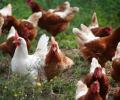
Farmers in the two states have reportedly begun culling chickens, while the state governments have restricted supply of chicken across their borders.

The bank was worth over Rs 80,000 crore as recently as September 2017. The lender had grown at breakneck speed, helped perhaps by Rana Kapoor's reputation as a banker, willing to aggressively write checks.
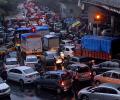
Mumbai saw an average 46 per cent decline in congestion during the morning rush hour on Tuesday. New Delhi's data also showed an average 34 per cent decline in congestion during morning.
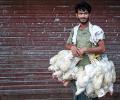
Weak demand from the poultry sector has resulted in a sharp decline in feed prices too, with both soybean and maize prices falling by nearly 25 per cent in the past two months. The poultry market consumes around half of soybean and maize production in India.
 © 2025 Rediff.com - Investor Information - Advertise with us - Disclaimer - Privacy Policy - Sitemap - Feedback - About us - Terms of use - Grievances